In 1973 the Disney studio created a cartoon which is a gem of comedy and storytelling. It’s based on the legend of Robin Hood, a bandit from the Sherwood forest who robs the rich to save the poor. The Disney’s furry interpretation of this myth seem to collect all the most recognisable elements from the previous adaptations. It’s got it all: the archery competition, an intense fight in a burning room, and, of course, the jail break.
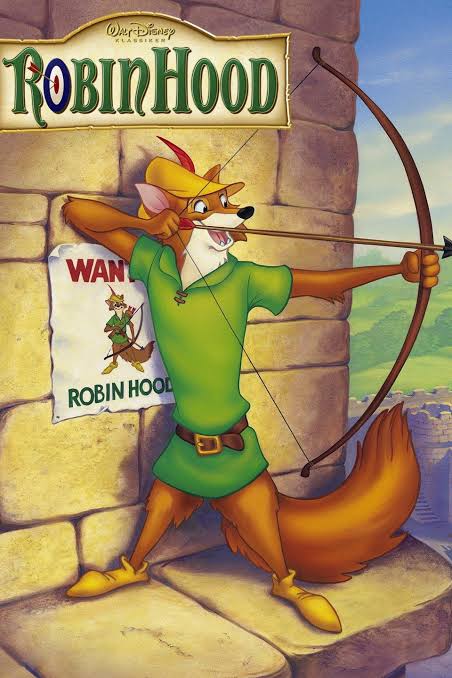
The plot
If we don’t count the narrator’s introduction to the setting, this interpretation begins in the Sherwood forest with Robin Hood and Little John getting away from Sheriff and spotting prince John’s carriage.
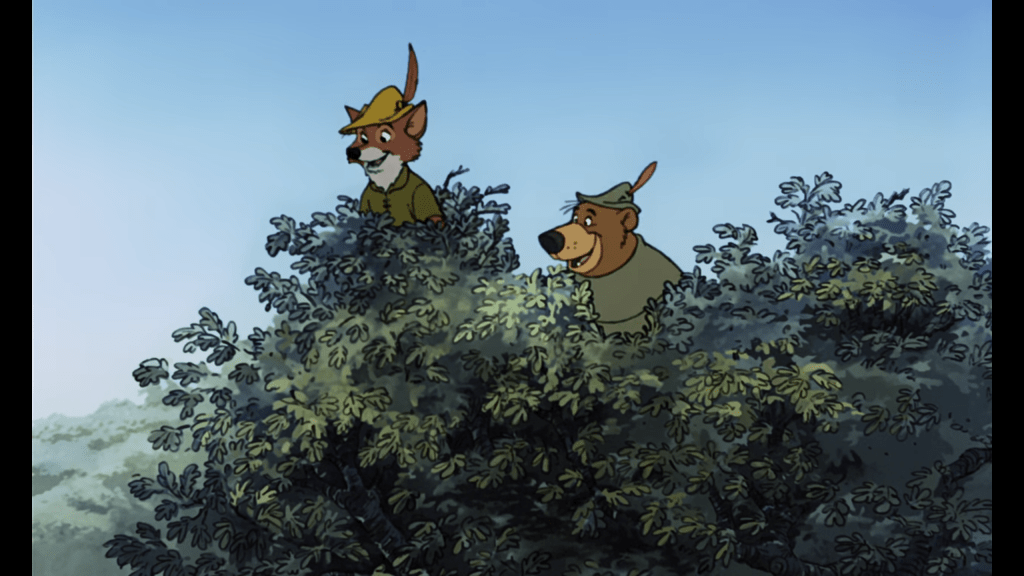
Robin and Little John fool the prince and take away as much gold as they could carry to later give to the people. This scene serves as a brilliant introduction to our comical villain, Prince John, and his trusted sidekick, Sir Hiss. This is also where we can notice a fun little trivia that all of prince John’s servants are either carnivores or species not native to England, while Robin Hood and ordinary citizens of Nottingham are all animals native to England1. I find it a nice little not towards the fact that British aristocracy was hardly ever English by blood.
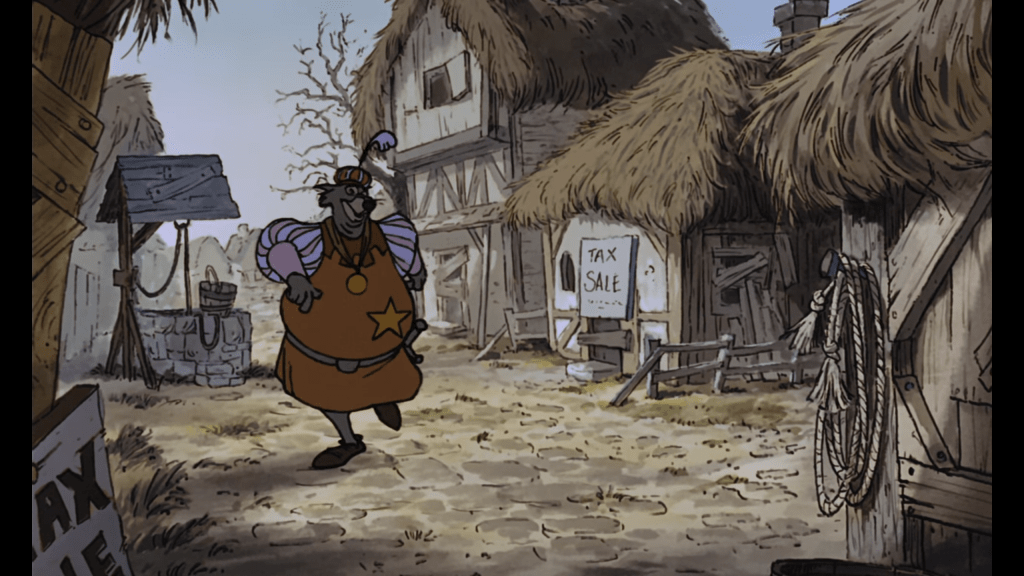
Later, the story introduces us to the everyday life of the Nottingham citizens and how friar Tuck, local pastor, tries his best to tend to the citizens’ needs while the Sheriff is practically robbing everyone even going as far as stealing a child’s birthday present.
The fact that the story follows the birthday child and his friends to whom Robin Hood presents a bow and his hat may seem random at first, but, in truth, it is our introduction to the final main character of the story. Maid Marian, Robin Hood’s childhood friend and now as they have grown, love interests. We learn that she has been gone for long and has recently returned back to Nottingham.
As she wonders if Robin even remembers her after all these years, the scene switches to daydreaming Robin Hood who is thinking about Marian. While he is burning their lunch, Little John is doing the laundry.
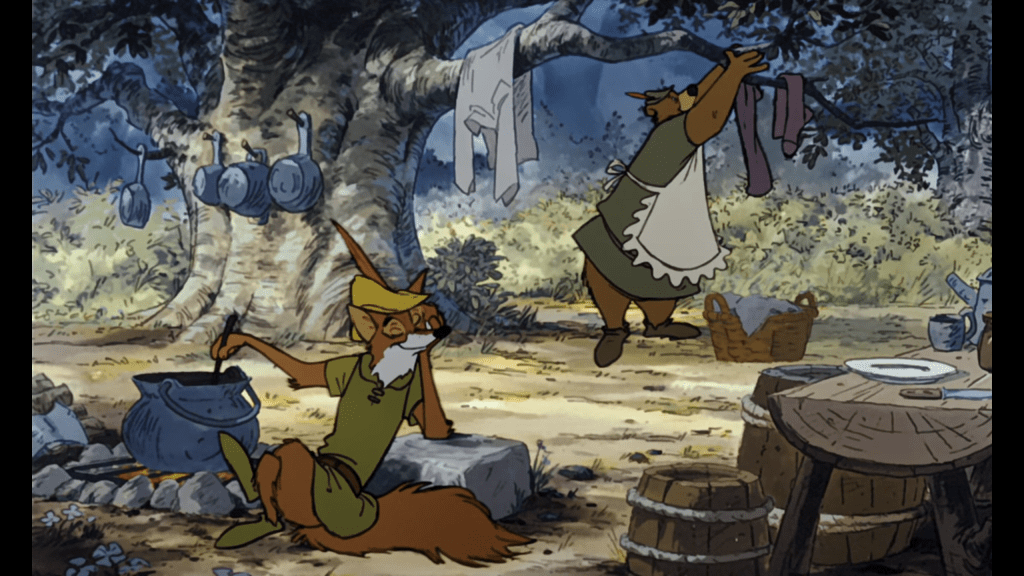
This scene doesn’t add much to the story but it’s important to me for personal reasons because when Little John smells the burnt food and rushes to take the cauldron off the coals, they’ve got this little dialogue:
Robin Hood: Hey! Whoa! I-It’s boiling over.
Little John: You’re burnin’ the chow!
It sounded so well, especially in the translation I have watched in my childhood, so in my family we still use these lines every time when we need to take something off the stove quickly.
Anyway, friar Tuck comes over to them to inform the duo that Prince John in holding an archery tournament. Of course, it’s all a scheme to capture Robin Hood, but the winner of the tournament gets a kiss from Maid Marian, so Robin Hood is in.
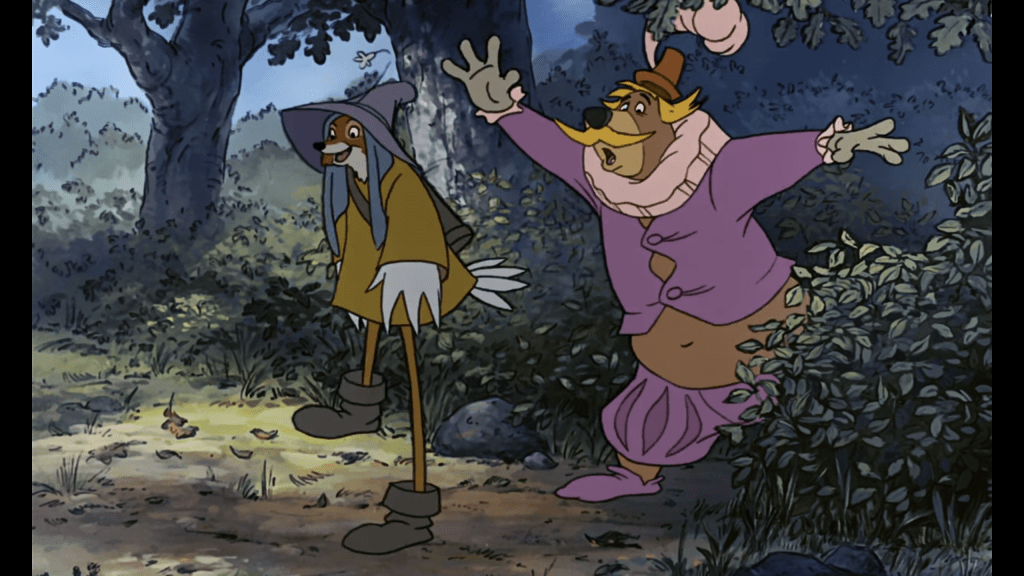
He and Little John disguise themselves to get into the tournament and everything seem to go fine until Robin wins and is surrounded to get ”escorted” to get the kiss from the Maid but in reality they wanted to capture him.
Luckily, Robin is let free with a little help from Little John and then all hell breaks loose.
The chaos during the tournament is one of the funniest scenes in the whole film and mixes cartoonish elements with more serious storytelling exceptionally well.
After the chaos, Robin and Marian go to the Sherwood forest where they share a romantic moment and later have a feast with the townsfolk. This feast is important because the next fay even the Sheriff sings a song from it about how terrible of a ruler prince John is. Upon hearing that, Prince John throws a tantrum and raises taxes so high that basically everyone in the town goes to jail for being unable to pay.
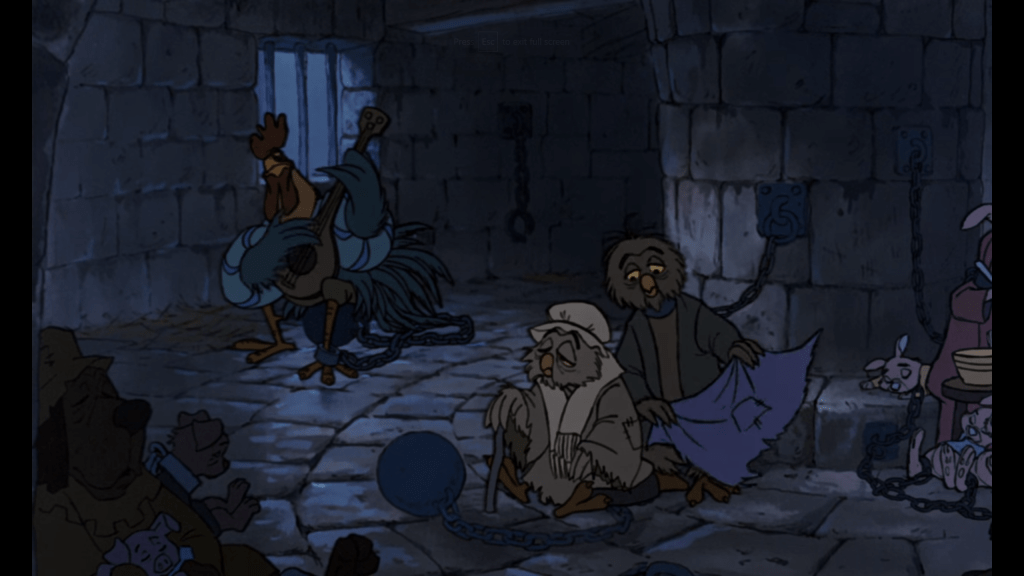
The last to be confined is friar Tuck and a mice couple who run the church with him. They donate their last farthing to charity which gets immediately collected by the Sheriff. This deed becomes the last straw for the friar before he straightforwardly attacks the Sheriff.
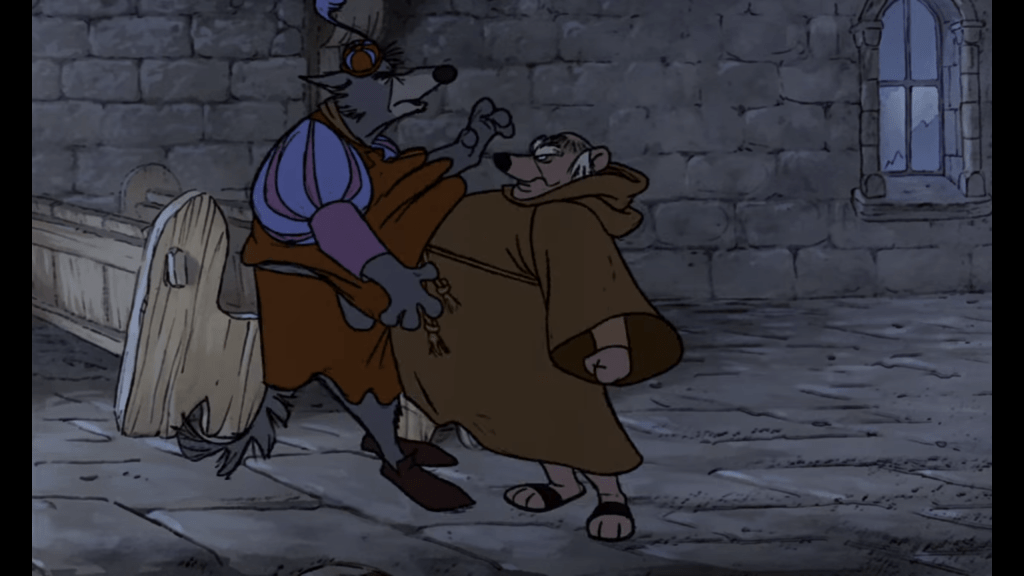
For this attack friar Tuck is sentenced to death the next morning, which Robin Hood learns of quickly and decides to break everyone free. He and Little John disguise themselves and enter the castle grounds. While Little John frees everyone from prison, Robin goes for Prince John’s room where all the money is stored.
He sends the money to Little John in prison and as they were meant to get the last money bag, prince John awakens and a fierce chase begins. This is an intense and action paced scene which has got a far more serious tone that the previous archery tournament. This sequence also acts as the culmination for the film as after everyone escapes safely the narration comes back to the bard from the beginning who informs the audience that soon after these events king Richard returned and restored peace to the land.
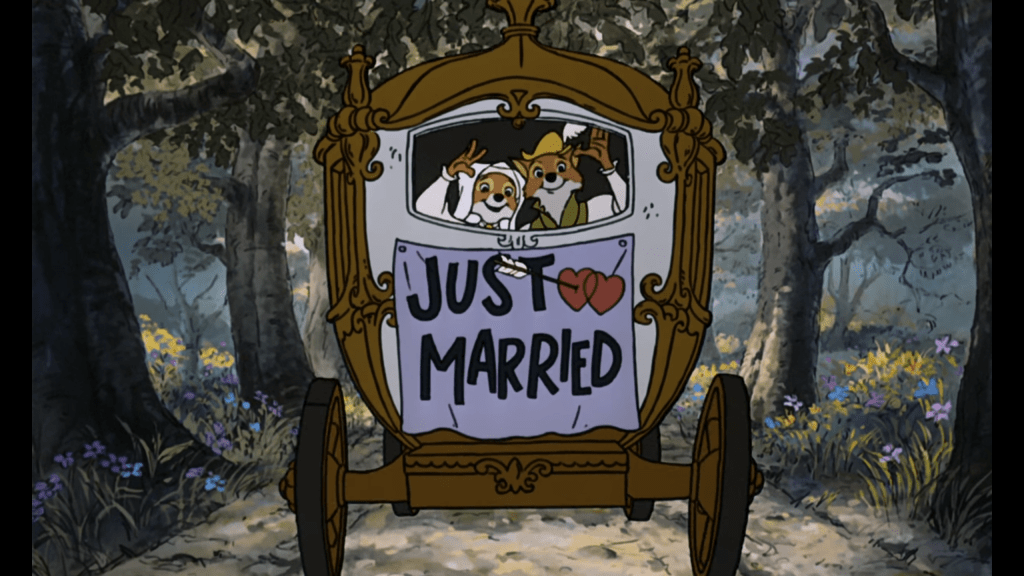
In a classic Disney fashion, the cartoon ends with the marriage of Robin Hood and Maid Marian.
Structure
I loved the story during my childhood but it felt a bit too over the place at that time. Now As I was writing the summary of the plot I have realised that it’s practically impossible to throw any scene out since it sets up either a character or the events of another scene. In other words, not a single scene wasted or done without meaning. Every moment serves storytelling purposes, something I wish to see more in modern films and cartoons.
Overall, the structure is very logical and everything that seemed unnecessary to me at first in reality provides the obligatory context for the film. At also blends exceptionally well humour and light-hearted comedy with more serious topics and grim moments.
One of those moments i have always found hauntingly beautiful even when I was a child. It’s the lyrics to the song “Not in Nottingham” sang by the narrator-bard (Roger Miller in original) while he was in prison with the rest on the citizens right before the climax part:
Every town
Has its ups and down
Sometime ups
Outnumber the downs
But not in NottinghamI’m inclined to believe
If we weren’t so down
We’d up and leave
We’d up and fly if we had wings for flyin’
Can’t you see the tears we’re cryin’?
Can’t there be some happiness for me?
Not in Nottingham2
Some thought on the film
I haven’t given such of my opinion in this post, mostly simply retelling the plot but that’s the beauty of this film. It speaks for itself. Rewatching it also helped me understand what I’m missing in the modern cartoon not only from Disney but many other Western studios: they exclude any topic that is not meant for children but is integral part of life. It may be hard to understand from my explanation but if we take this Robin Hood cartoon as an example, the theme here is taxes. Children don’t need to pay them but they should know what it is anyway and they can see how political abuse of taxation can end even they wouldn’t even understand it. The thing is, even if children haven’t heard of taxes before this cartoon, they will now. They will understand what can be if you don’t pay them, they will be introduced to elements of the “adult” world through cartoons.
Many modern cartoons tend to shy away from these topics giving pure entertainment without any meaning. Or sometimes they give too much political meaning which cuts the amount of parent who would want to show the film to their children significantly.
Of course, not all animated film are like this and not all of them are meant to teach. I thoroughly enjoyed “The Super Mario Bros. Movie”(2023), a film for fans which has entertainment as its core purpose. It fulfills this purpose to the brim. On the other hand, “Puss in Boots: the Last Wish”(2022) and “Coco”(2017) are great examples of more “serious” cartoons.
Either way, what I want to say is that even though Robin Hood is an old cartoon (it’s 52 years old! how?!) it’s still a good one. None can take it away. The jokes don’t feel old-fashioned and it doesn’t feel like it came from the dark era of Disney at all. In fact, I like it even more than some golden-age Disney films. I guess, I will never be able to recommend it enough, so I can only suggest watching it and telling me if I am just old and wrong for praising it.
- And if someone wants to ask, why one of the animals in the film is a turtle, there are no turtles native to England. To you I say that leatherback turtles do come to English shores in summer and that’s when the film takes place, so it’s alright for them to be there. No one said that their family lives in Nottingham, maybe, they are just visiting. ↩︎
- Lyrics are taken from Disneyclips: https://www.disneyclips.com/lyrics/lyricsrobin.html ↩︎
 Geeky Nerd
Leave a comment