The Aristocats is another Disney cartoon from the so-called “Dark Era” when the studio was trying to experiment with the stories and tried to do more than retelling of old fairy tales. Unfortunately, they were too ahead of its time for the audience to like those films. This particular one was one of my childhood favourites because it was a unique grounded tale with many comedic moments to keep me entertained and many dramatic moments to keep me engaged.

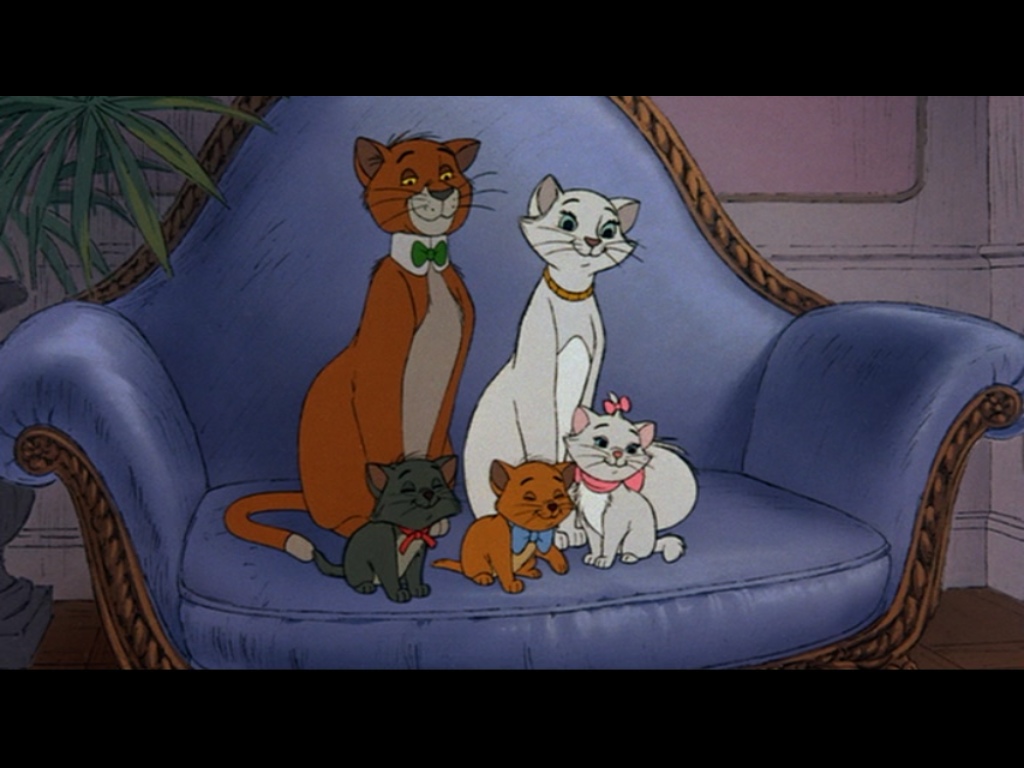
The story follows a family of cats who live in a family of an elderly woman or royal descent in Paris sometime in 1910s. One day the woman asks for her lawyer to visit so she can make her las will where she states that all her property and other possessions shall go to her cats and then pass to her butler. The butler overhears it and decides to get rid of the cats, so he shall be the first in line.

Consequently, he steals the cats in the night and tries to drive them as far away from Paris as he can on his motorcycle. To his misfortune a couple of farm dogs heard him pass by and attacked him thinking he was a thief. It resulted in them getting his hat and a cart that was attached to his motorcycle. In the meantime, the basket with the cat family falls under a bridge. They are greatly frightened by this misfortune and waited out the night there before setting out for Paris in the morning.
Coincidentally, when Duchess was tidying herself in the morning she meets a stray can by the name of Thomas O’Malley who reluctantly agrees to help them get home.
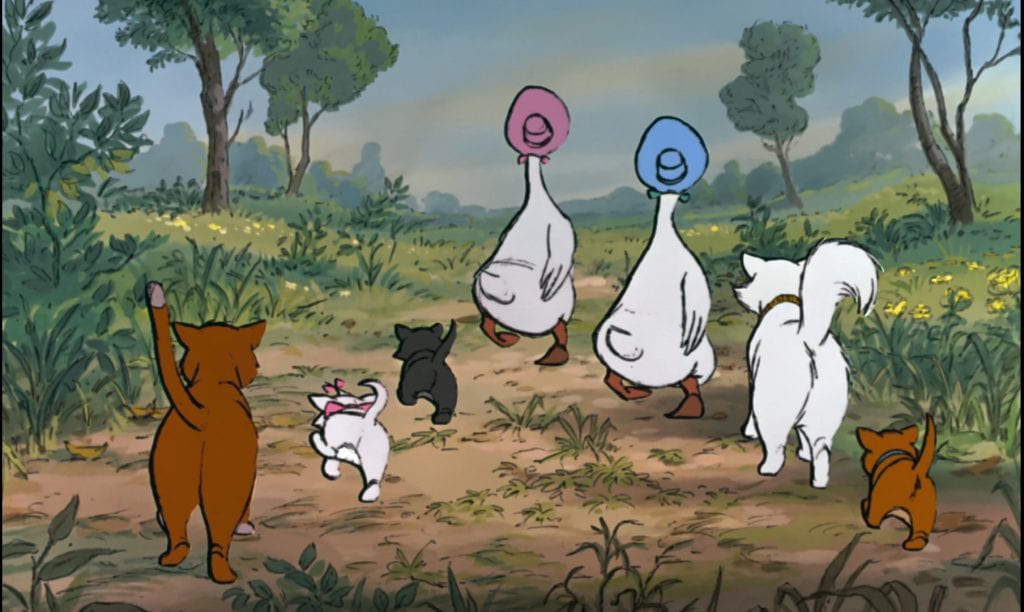
They go on a number of adventures on their way, from meeting a train to tagging along with a couple of English geese. Finally, they reach Paris by nightfall and decide to stay for the night at an abandoned house where they meet some of O’Malley’s friends whom he called in passing “swingers” but when Duchness inquired what does that mean, he refuses to elaborate1.
When they go to bed, the narration switches to the butler trying to get back his cart and hat from the farm dogs which is one of the funniest moments in the film.
In the morning they finally reach the house and say good bye to O’Malley since their lifestyles and backgrounds are too different for them to stay together. However, instead of greeting their owner, the cats family is met by the butler who catches them in the sack and tries to send them by post to Timbuktu. Luckily for the cat family, though they are saved by their mouse friend, O’Malley, his friends and Fru-Fru, the lady’s horse. The film ends with the lady changing her last will to donating her estate to a stray cat orphanage, so all the cats can live happily there.
Etiquette and education
One of the important topics that is touched upon throughout the story is etiquette and education. We can see it in the very beginning with Duchess teaching her kittens to thank others for their help and watching her children draw, play the piano, and sing. Needless to say, these artistic abilities help them get along with O’Malley’s friends later.
She also teaches them to be kind and polite to others. They share their “créme de la créme d’Edgar” with the mouse that lives in the lady’s house since they are rich, so they try to also be charitible.
When they meet a couple of English geese and O’Malley’s friend they also show proper manners, especially Duchess, who seem to charm people with her good manners and kindness.
I have to be honest, I don’t remember many modern cartoons where a polite and proper character was used as an example of proper behaviour and not for some comedic effect or to show how English butlers act. To clarify, I specifically mean Western cartoons right now, in anime, politeness is normal and standard.
Relevance in today’s day and age
The relevance of the story is somehow immense since I find that more and more young people don’t know how to behave or communicate with other people. I may be late to the party with this conclusion, but I’ve been a hermit for a long time and only recently started communicating with people more for professional purposes. The thing is, ever since I came to Spain I wondered why it’s normal to let children scream and do whatever they want without trying to tell them that their behaviour can be troublesome for people around them. I may be wildly speculating here but this is the reason why some many people cannot stand Gen Z(people born from around 1997 to around 2012). Many of them were raised by Internet without proper upbringing and control from their parents, so they just don’t know how to behave, they were never taught to.
By the way, for those who believes that I may blame only parents on this matter, not at all. The majority of Gen Z and now adults and should be able to correct their behaviour if they try, besides, the whole of society that was around them has had its influence, it’s a complex matter overall. Thus, I don’t blame anyone but I’m trying to give an explanation for those who wonder why it’s that way. Unfortunately, watching this cartoon will not be enough to fix the problem, but it may at least bring awareness to some people.
So, for me, this animated film shows how proper manners can help you get along with people around you, thus showing importance of upbringing and etiquette in everyday life. Surely, it doesn’t encompass the whole issue, but it’s an old cartoon, it was made for people of its time, although it still stands strong to this day.
- For those who may not know, the word “swinger” has got two slang meanings: 1. a fashionable person who goes on many social events; and 2. a person who engages in group sex or swapping sex partners. Just saying, that’s how they made PG-13 cartoons before the cartoon rating were even a thing. ↩︎
 Geeky Nerd
Leave a comment