This post will be about the mini cartoon series – Over the Garden Wall (by Patrick McHale, 2014). This is one of the modern masterpieces that capitalises on classical literature in the best way possible. Akin to how American McGee’s Alice (2000) takes the best decorations from the Alice in Wonderland story (by Lewis Carroll, 1865) to whap around the firm carcass of its own tale, Over the Garden Wall takes the structure from Divine Comedy (by Dante Alighieri, 1321) and wraps it is a growing-up story of an insecure teen boy named Wirt.
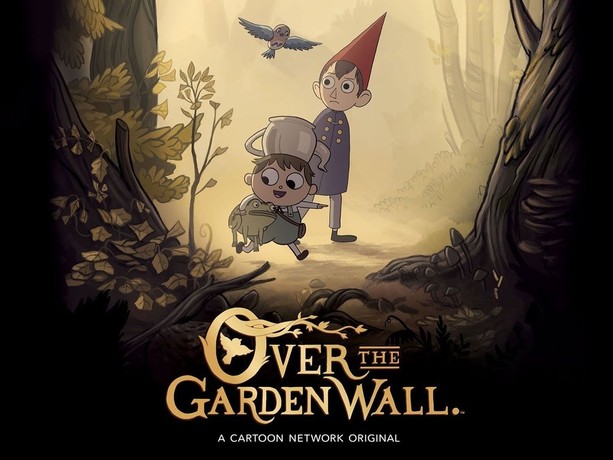
The plot
As I have just stated, the story takes the structure from Dante’s Divine Comedy, specifically the Hell part, which is the first of the three. The structure repeats itself in the sense that each episode except for the last three is reserved for one of the rings of Hell, described by Dante, through which the protagonist is meant to navigate his descent in order to get out.
I will not go into detailed symbolism here, there have been many articles and videos on this online. Some of the notable examples are:
1. A deep dive by Meromorphic which goes into analysis of the series episode by episode. I’ve started my own journey into the series’ symbolism with this video.
2. A fascinating lengthy article by In Asian Spaces which describes the symbols and references found in the series.
3. An analysis by ОкКульт (literally “OkCult”, where, I believe, “cult” is short for “culture” judging from the channel’s topics). The original video is in Russian but there are decent English auto-generated subtitles. It delves mainly into the religious symbolism of the series.
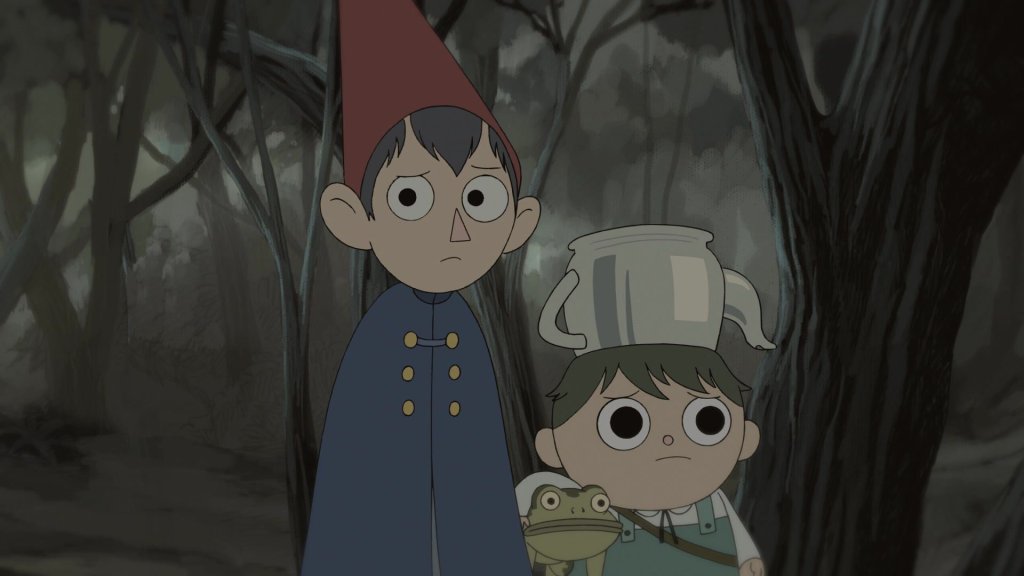
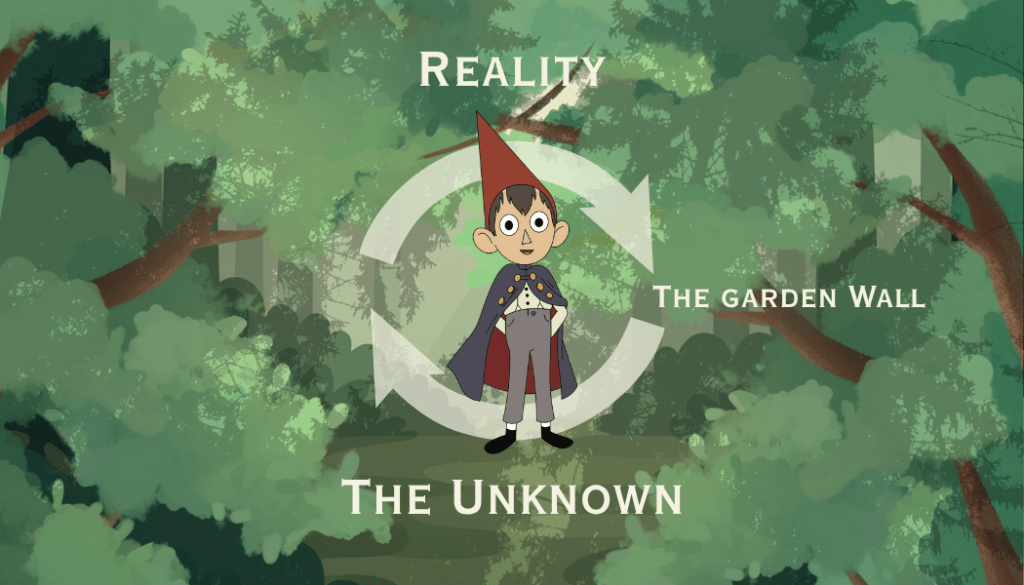
Therefore, this time I will mainly talk about Wirt’s spiritual journey from childhood to adolescence. This is technically a more complicated process than what the story shows but there is only so much a two-hour narration can show. Either way, this tale follows the classical hero’s journey very literally and is developed with a great attention to detail.
The Journey of Growing Up
Now, it’s time to talk about the main topic of this post: Wirt as a protagonist of a bildungsroman. However, I don’t expect everyone to be too familiar with this term, so let me briefly explain it first.
As explained by Encyclopaedia Britannica,
a bildungsroman is a ‘class of novel that depicts and explores the manner in which the protagonist develops morally and psychologically. The German word Bildungsroman means “novel of education” or “novel of formation.”’
In other words, it’s a novel where a character grows up as a person. It may be at a young age or older but, generally, it’s about teenagers stepping into adulthood or children turning into teens, two very significant stages of a person’s life.
One famous example of this genre would be J.D. Salinger’s “Catcher in the Rye”. I want to give this particular work as an example because of the dream Holden, the protagonist, talks about. The dream to catch children in the rye field on the edge of the cliff so they won’t fall. The same responsibility to protect a child from death lies on Wirt’s shoulders since the Unknown is a treacherous place and Greg, his younger brother, is too young and naive to navigate it alone.
The Responsibility of an Older Brother
The most prominent mental challenge that Wirt has to face on his journey is protection of his little step brother Greg. Many characters remind his to take good care of the boy since he is too young and innocent to fend for himself.
It’s easy for every viewer to understand it’s task as it’s obvious to care for your loved ones. But there is another layer to this responsibility that is put on Wirt. In reality, it requires more than just shield his brother from danger but also to lead him out of danger in the first place. To tell you the truth, Wirt fails it miserably by the middle of the tale up to the confrontation with the Beast. He neglects Greg and very often goes after him instead of leading him like he should, all because of his main issue:
Insecurities, Insecurities, Insecurities…
Wirt, by the context of the ninth episode is in his early teen years and does not come from the most traditional family. His mother divorced his father and married again. It’s hard to say if Wirt remembers his father or talks to him but he sure seems to dislike his step father. However, there is no indication as to why he does so, since his step father seems to care for Wirt. For this reason he wanted Wirt to be in the school band which would allow Wirt to hang around Sarah, his love interest, more.
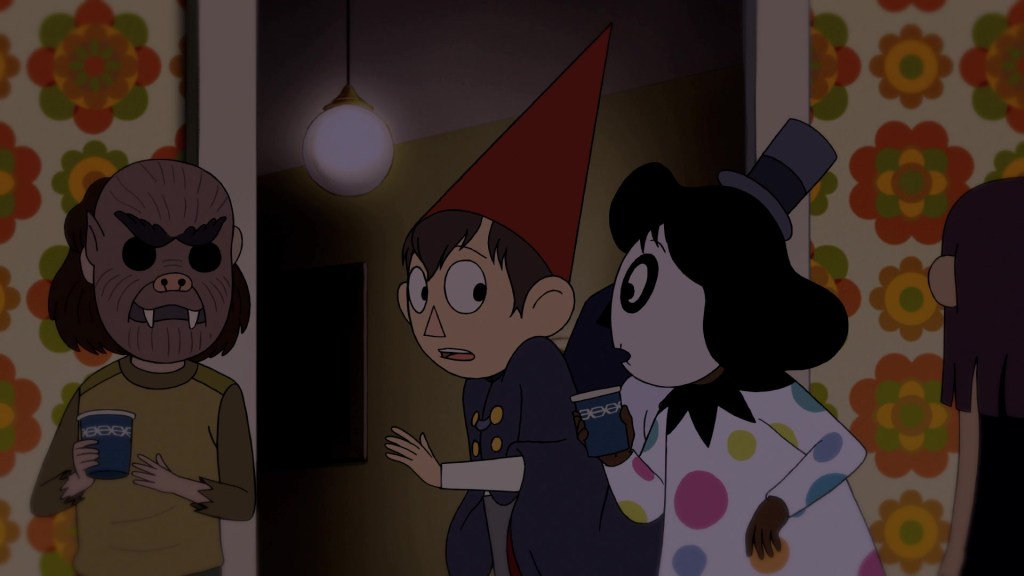
It’s unclear if Wirt dislikes the idea because he’s too shy to talk to Sarah or because the idea comes from his step father, but he surely doesn’t feel comfortable around people. Given his age, it’s understandable; given his hobbies, it’s even more understandable. After all, when you hear teenage hobbies, Renaissance architecture and poetry are not the first things that come to mind.
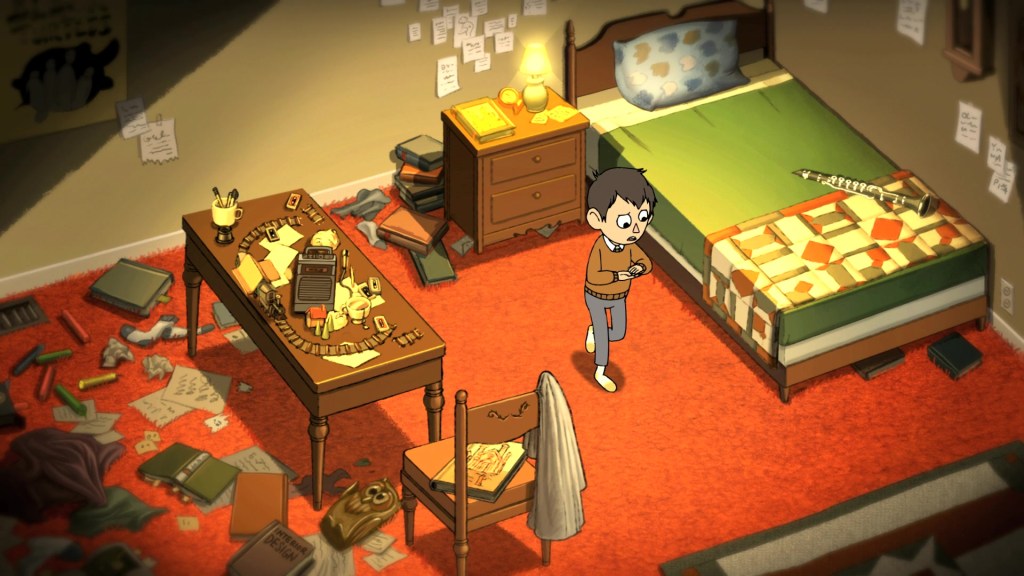
All in all, Wirt is a very insecure character who is very cautious about what he is doing and doubts himself a lot constantly allowing others to lead him instead of leading the way himself. Moreover, we, as audience, are never truly shown the reason for his low self-esteem, but my guess is that it’s rooted in his parents divorce more so than his hobbies.
Confrontation
If you want to know all the boys’ adventures, I cannot recommend this series enough, so you can see their journey for yourselves. All I will say is some time after being betrayed by their guide, Beatrice, Wirt finally gives up on ever finding the way out and takes a nap with his brother under the tree. It is heavily alluded that this was meant to be their final resting place and Greg’s child soul was meant to be taken to Heaven while Wirt was meant to stay in the Unknown, but Greg makes the deal with the devil, rather literally, to take Wirt’s place and die for his brother to live.
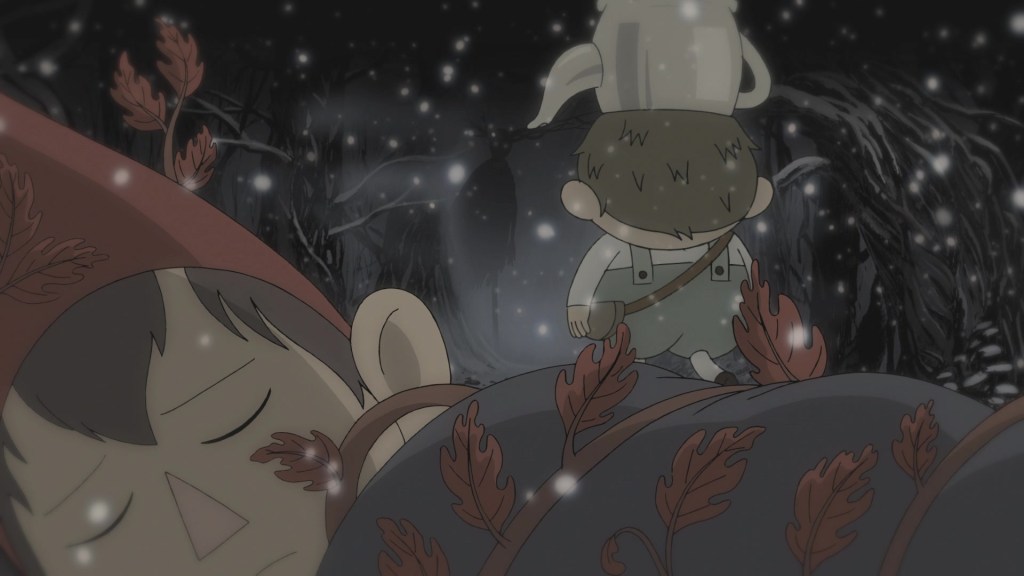
When Wirt finally wakes up and realises what has just happened, he rushes to save his brother. This is the part of the series where we are shown their past and how they cane to the Unknown. I believe, it’s meant to show us how Wirt reminisces on his past and decided to face his fears because he truly cares for his brother and is not ready to give his life in. That is where he encounters the Beast.
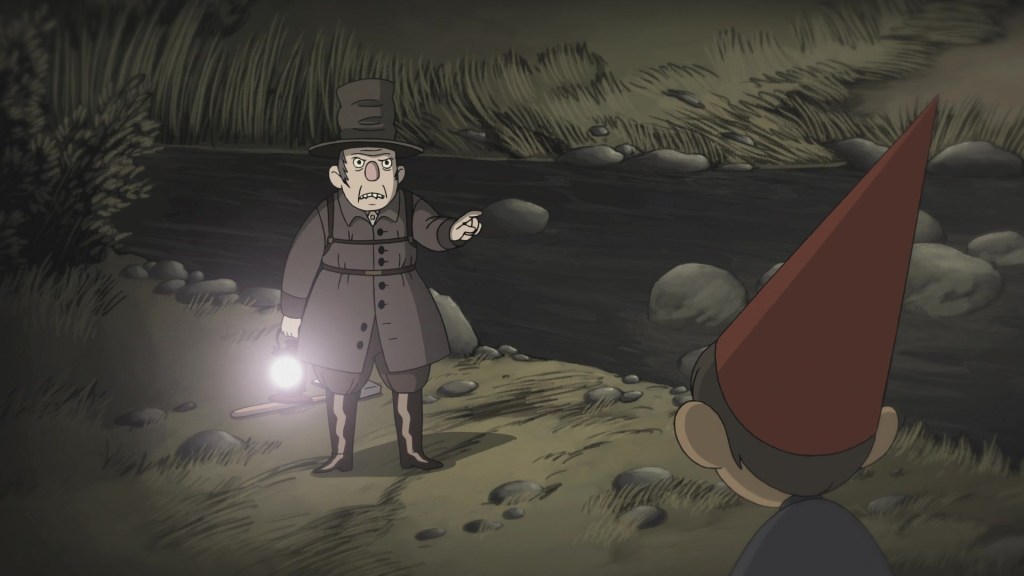
The Beast takes it’s inspiration from Lucifer as it literally carries a light, his lantern, and betrays those who put their trust in him. Regardless of his religious symbolism, I want to talk about the Beast as the symbol of hopelessness and desire to give up. More so the desire to give up than anything else.
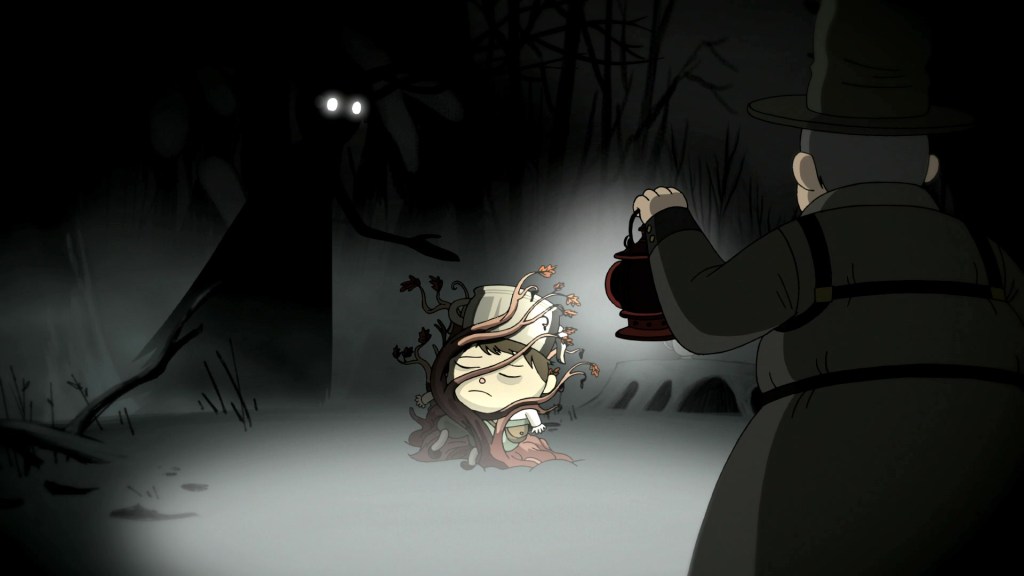
We are given some reason to believe that it’s more than just an evil entity and more of a test of courage for those who brave the Unknown1. Firstly, he challenges the Woodsman by lying that his daughter is dead. In truth, he tests him to see if he will accept it and move on or stay in the past by protecting the lantern. We know, that he chose the latter until our second challenger comes in – Wirt is offered to care for the lantern on the same conditions as was previously Woodsman. If he want to save Greg’s soul from death, he would have to feed the lantern, which we know he refuses because he finds the idea “dumb”. Namely, he finds dumb the idea to dwell in the past while you can still go on. After all, at this point in the story the boys still don’t know how to get out of the Unknown, Wirt doesn’t know the way, but he knows that staying there wouldn’t bring him closer to home, so he refuses the terms.
On the side note, I believe, this one is meant to parallel his relationship with his stepfather, the show didn’t dwell on it, but from the little context it provided, I’m inclined to believe that he still thought about his biological father and couldn’t accept his new one.
Last but not least, I want to mention how Edelwood is created: Edelwood trees grow where those who gave in to despair died. It’s important because it places a very strong emphasis on the fact the Unknown losing one’s hope = losing one’s life. And that’s exactly how the Beast was able to trap Wirt before Greg agreed to be taken instead of his older brother.
Return to the Normal World
In the end, Greg and Wirt find themselves in the lake over the Eternal Gander wall. Wirt comes to his senses first and saves Greg from drowning before collapsing of the ground himself. Later he finds himself in the hospital next to his lively brother who eagerly retells of their adventures in the Unknown.
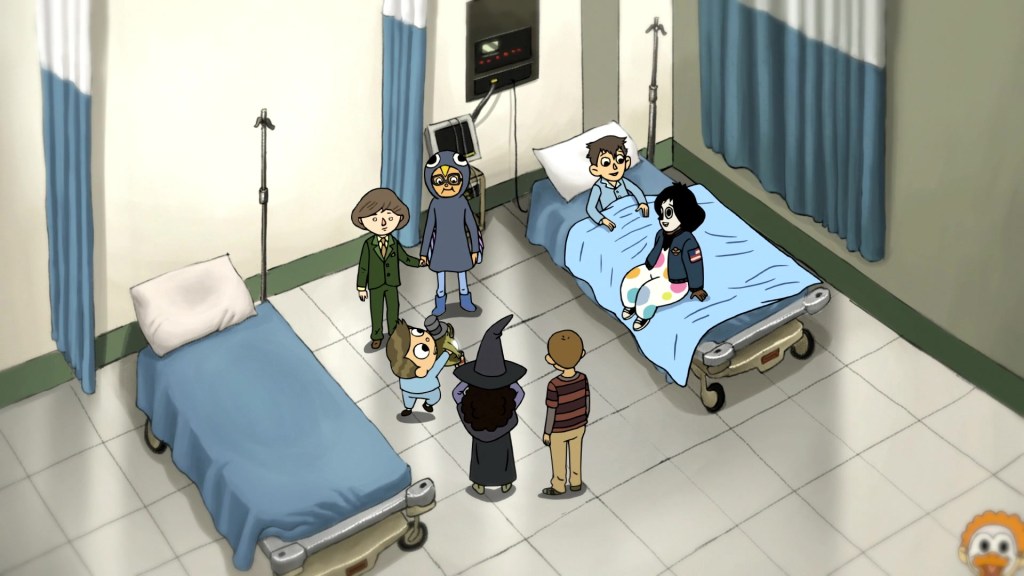
It’s at this moment that Wirt finally finds his courage. He is still embarrassed by Sarah finding out the tape with his poetry which he wanted to retrieve prior but he is not freaking out like we can assume he would have had he not had his adventure. In other words, his journey through the unknown helped him gain courage and decisiveness. A classical hero’s journey, one may say.
- Every time I see a good representation of Lucifer in media it goes just like Johann Wolfgang von Goethe described in Faust (1790): “I am part of that power which eternally wills evil and eternally works good.”
There is no better description for the Beast in this series. ↩︎
Pictures taken from:
https://www.rottentomatoes.com/tv/over_the_garden_wall_2014_2
https://fancaps.net/tv/showimages.php?6156-Over_the_Garden_Wall_Season_1
 Geeky Nerd
Leave a comment