Since I am an avid theory crafter in Genshin Impact, I wanted to focus on one of many aspects in Genshin Impact that I really like. Precisely today I will write about symbolism of colour within the game. There are several points which sometimes get overlooked and I may myself overlook some, but regardless I will do my best to provide the general description for each important colour to help you visually understand the game lore better.

The Elements
Anemo
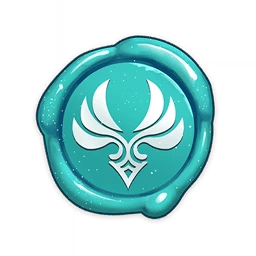
It’s typical for the wind to be represented with turquoise of teal in Asian games, I believe, Final Fantasy does the same thing, for instance. As for Genshin, there is no other specific symbolism assigned to this colour which is not the case for the majority of the elements as we will see later.
Cryo

Light blue is often associated with ice, and ice is the form Cryo takes. It’s cold and sharp. It is also the colour of the Frost Moon, the only of the three which survived the War of Funerary Flames. It’s blue avatar can be seen in game during the night. Aside from that, given the last plot developments, the concentrated moonlight also shares Cryo colour just like the machines left by king Deshret, which is not surprising since he most likely have learned to use moonlight energy from Nabu Malikata, who in turn is a seelie.
Dendro
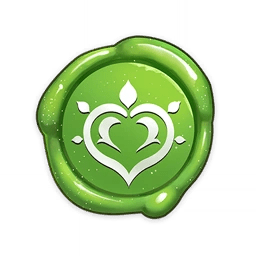
The colour of verdure and electronics in Teyvat since it is heavily related to Irminsul which is practically a supercomputer. I will also argue that it is the original colour of the Iridescent Moon1. Being connected to the Irminsul also correlates it to memories rather than the great Tree itself, since Irminnsul is a white tree.
Electro
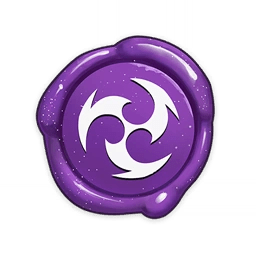
Purple is the colour of Eternity and also the Abyss. Eternity is the closest to the Heavenly Principles because the the Eternal Moon is the oldest and the biggest of moons. As for the Abyss, it may be the same situation as in any other game. Black as a colour is absolute, it’s got no shades, so it’s hard to code anything with it, thus, many times darkness is represented with purple. As well as purple generally being considered the colour of all things mysterious. Other than that, it may also allude to the fact that the Heavenly Principles came from the Abyss2.
Geo
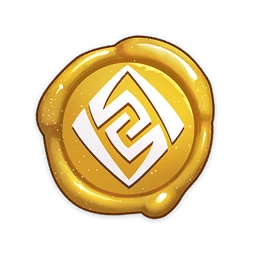
Deep yellow, it’s the colour of mora and is the closest shade of colour to the light element that the siblings have possessed before the game, given the Abyss sibling still possesses it, while the Traveller doesn’t. In any case, it is the colour of light and of rocks. In game it may refer to either that or to mora, as one of the loading screen descriptions says (and I believe it’s important here): “It is a catalyst of sorts, in that it is a medium for physical transformation. That is why so many things can only be accomplished through the use of Mora“.
Even though Istaroth, the Shade of Time, was worshipped in Mondstadt and is implied to be connected to Anemo, I have to state that she possesses far more gold in her design than turquoise, much like Rhinedottir, Gold, who is heavily connected to the theme of catalysts (mora as catalyst) in her design and name.
Hydro

Blue like the Primordial Sea, the origin of all life. That is to say, the origin of all draconic life and Fontanians. As much as I can understand, the original humans came from Abyss3, although, there is no confirmation of that yet, so I won’t digress any further.
Since blue is associated with life and water, it is also the most common element of healers in the game and many other Hydro characters have got healing abilities.
Hydro also seems to be the element of Columbina, the new Moon Goddess, which surprises me because she is supposed to belong to the Frost Moon4. Aside from Columbina, Naberius, the Shade of Life can also be associated with Hydro.
Pyro

Red is a fiery colour. It can symbolise both anger and passion and both suit this element nicely. This is the element associated heavily with Ronova, the Shade of Death. Apart from Ronova, one can also argue that Asmoday’s cubes are also connected to red but this is where I want to continue to the other theme I wanted to review in this post:
Quality Levels
Yes, these are important as well since they too refer to certain forces in the game.
///And thankfully to Nancelilspace on DeviantArt, I can show you quality background without items. Link, of course, is provided below.///
1-Star: Silver
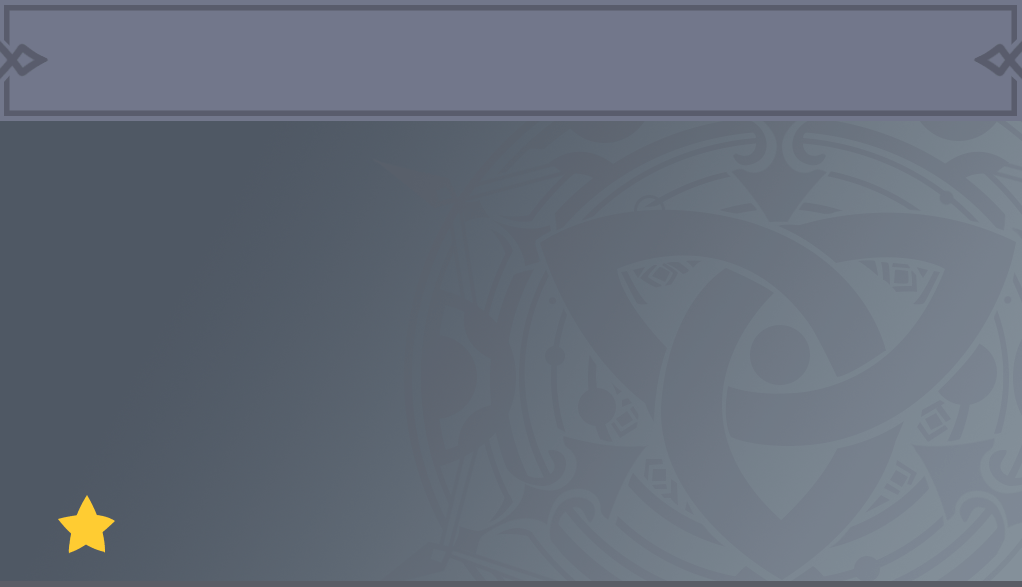
To be honest, I knew what to write about the rest of the quality levels but not this one at first. However, when I started writing about the 2-star quality, I realised something. Grey is the colour of Irminsul. It’s the basis of all in Teyvat. Irminsul controls the Ley Lines and all life is connected to it. It may seem cheap to put such an important tree at such a low quality level, but I urge you to think about it this way: Irminsul is in eveything in Teyvat or rather everything in Teyvat is inside Irminsul’s database. Irminsul is the skeleton upon which elemental “flesh” is put. It’s possible to think of it almost as the basic mold from which all forms can be crated by adjusting it.
2-Star: Green
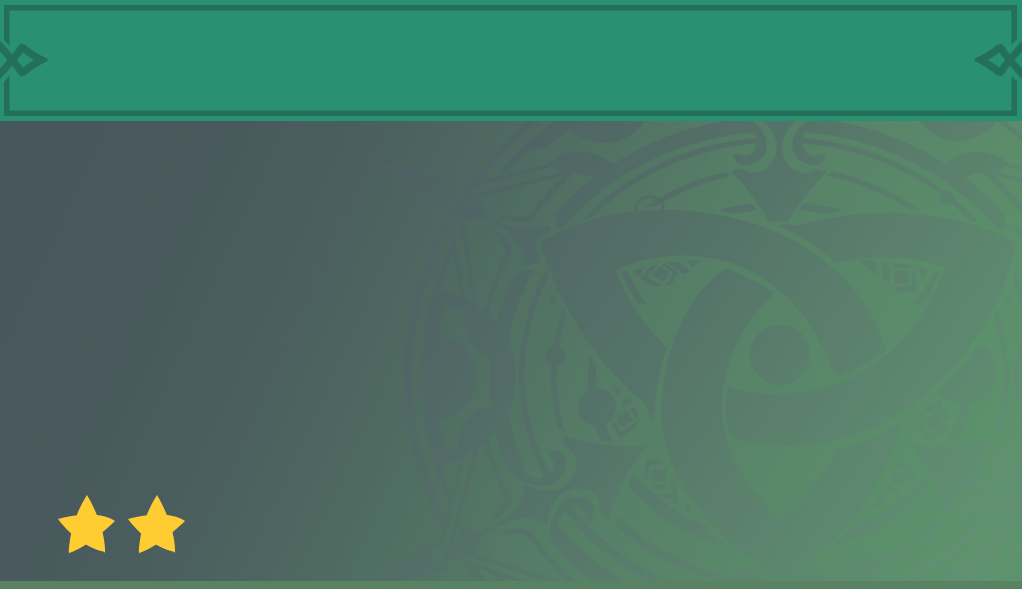
The Dendro colour. It’s the lush greenery that sustains life and is the element of the Dendro Archon, the avatar of Irminsul, the Tree of Life. Of course, it goes next being connected to memories5.
3-Star: Blue

The Hydro colour. Given the fact that all life comes from the Primordial Sea, it’s only natural for the Hydro pover to hold a high authority.
4-Star: Purple
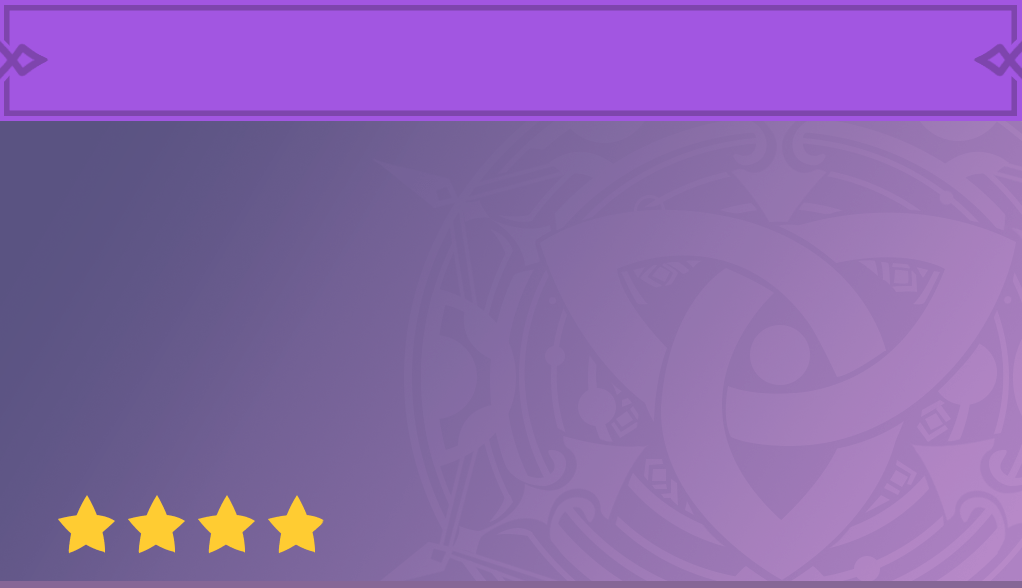
It’s the colour of the Eternity, or Electro. This puts together the three Moon Sisters6 (I have written about it in the first footnote and will later touch upon this after the rest of the rarities). So, just like Raiden Shogun said: “Eternity is the closest to the heavenly principles“. She is correct on this one.
5-Star: Gold
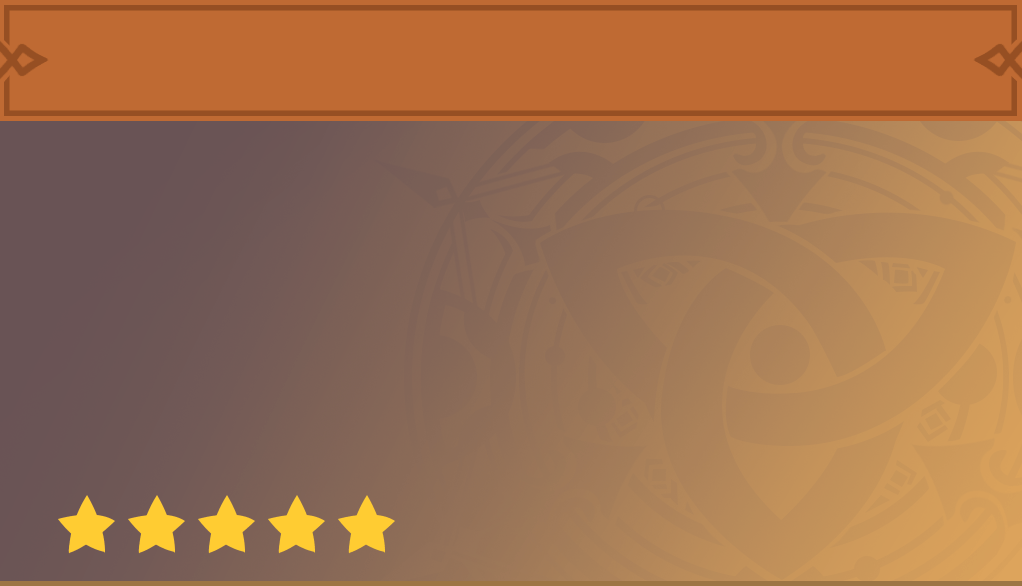
It was a conscious decision not to name it yellow. Gold often symbolises refinement, this case is not an exception. Every character who is 5-star is either a vision holder or a higher being which doesn’t require a vision at all to control some force. This is the colour of Nibelung, the Sovereign of Sovereigns, who hails from the Light Realm, and the original element, which the siblings possessed.
“6-Star”: Red
This is not technically a “6-star” but I’m calling it that due to a common gradation colour pallet, where the sixth tier in gacha games is colour-coded with red.
If we talk specifically about Genshin, then only three or two, if you count Manekins as one, characters, namely Aloy and the Manekin avatars are coloured red. What unites them thematically is that all of them came for beyond Teyvat. They are not native to this land, so they are given the denominator of “the other”, the foreign. Red is also the colour of the Heavenly principles, Phanes, if you will.
As for the connection between the Moons, the Sun and our dear Demiurge, it’s rather simple: the rarities show the alchemical refinement process and the three moons.
To begin with, the alchemical stages are as follows:
- Nigredo (blackening) – supposedly, it’s the Abyss, the Primordial Chaos from which all took shape.
- Albedo (whitening) – chalk, also known as the material used to create Albedo, the character. This is the colour of Irminsul and the 1-star rarity items. The clear shape from which anything can evolve.
- Citrinitas (yellowing/dawn) – this is where mora as the catalyst comes in. Apart from it, Istaroth may have gold in her design because Time serves as the catalyst for refinement, evolution (but there may be a different meaning).
- Rubedo (reddening/union) – this is the supreme form of life, hence it’s the colour of the Heavenly Principles, but also the colour of the other, that which does not belong to Teyvat. The Philosopher’s stone.
Now the full list of the rarities in relation to what they represent goes as follows:
- Chalk, or Irminsul, the basis of all things living in Teyvat;
- Iridescent Moon, the smallest and the most mysterious among the sisters. She is the one to later become the Crimson Moon.
- Frost Moon, the brightest moon and the only one which was not shattered during the War of Funerary Flames.
- Eternal Moon, the moon “closest to the Heavenly Principles”.
- Citrinitas, mora the catalyst to turn chalk into the pinnacle of matter, the Philosopher’s Stone.
- The Philosopher’s Stone, the Magnum Opus.
Well, this is all I wanted to talk about in this post. Hopefully, it was a decent overview and you have found it interesting. If there is anything you want to add or disproof, please, comment below. As for me, I will do my best not to parasite on Genshin theory crafting too much since it’s a rabbit hole that don’t want my blog to fall into, but if you want some other specific topic of Genshin lore covered, please do tell me. Thank you for your time.
Images taken from:
https://genshin-impact.fandom.com/wiki/Elemental_Sigil
https://gi.yatta.moe/en/archive/material/306/cryo-sigil
https://www.deviantart.com/nancelilspace/art/Item-Cards-Template-Genshin-Impact-879634089
- This information is not directly confirmed in the game yet as of me writing this, but you’ll easily understand my reasoning below. I will be brief:
The Three Moons are as follows: Eternal moon – Electro; Frost Moon – Cryo; Iridescent Moon – Dendro. The four primordial (as Nibelung, not Phanes, intended) aspects of Teyvat: Time – Anemo; Space – Geo; Life – Hydro; Death – Pyro. ↩︎ - Technically speaking, Heavenly Principles came from beyond Teyvat but necessarily from Abyss. It’s the recent Archon Quest where Alice or Nicole said that Teyvat is surrounded by the Abyss on the other side of the dome that makes me say it. It is possible that the Abyss only surrounded it after Nibelung’s return, though. ↩︎
- Dragons came from the Realm of Light; however, birds are more often associated with the Abyss and Jinni Liloupar often called humans “ravens”. Now, I have to highlight that the fact that humans came from the Abyss does not mean that they are of Abyssal origin. It’s just most likely that humans came to Teyvat with the Heavenly Principles, but the book “Before Sun and Moon” tells a different story, which makes me think that some humans, namely those of the Seven nations came with the Heavenly Principles, but humans of the Unified Civilisation, namely Kaenri’ah, Enkanomia, Hyperborea and most likely Remuria, co-existed in Teyvat with the dragons. However, these are only my guesses since there is no official lore about the origin of humans. On the other hand, it could be vise versa, and the Unified Civilisation was the one that came with the Heavenly Principles. As I’m writing this, there is no sufficient evidence to verify either theory. ↩︎
- Luckily, as I was finishing writing this post, Columbina’s character introduction was posted by Hoyoverse, so it’s safe to say she is not the new Frost Moon, but the new Welkin Moon, hence her power is not Cryo but Hydro. ↩︎
- By the way, do you remember the knowledge capsuls from the Sumery Archon Quest. The green ones contained the common knowledge that everyone could use, while the red ones contained the forbidden knowledge. Keep this in mind, please, I shall speak about the red colour later. ↩︎
- I cannot find a suitable place for this miscellaneous idea, but I find it important to include it: the three big ruins of the Unified Civilisation, namely, Kaenri’ah, Enkanomia, and Hyperborea (apart from the suspicious upside down city of the Chasm) – all can be found on the lands corresponding to the Three Moon Sisters (see 1st footnote) – Kaenri’ah under Sumeru, Enkanomia under Inazuma, and Hyperborea under Snezhnaya. ↩︎
 Geeky Nerd
Leave a comment